Longeva · peptides with a certificate of analysis
Glutathione (GSH): an antioxidant tripeptide with documented purity
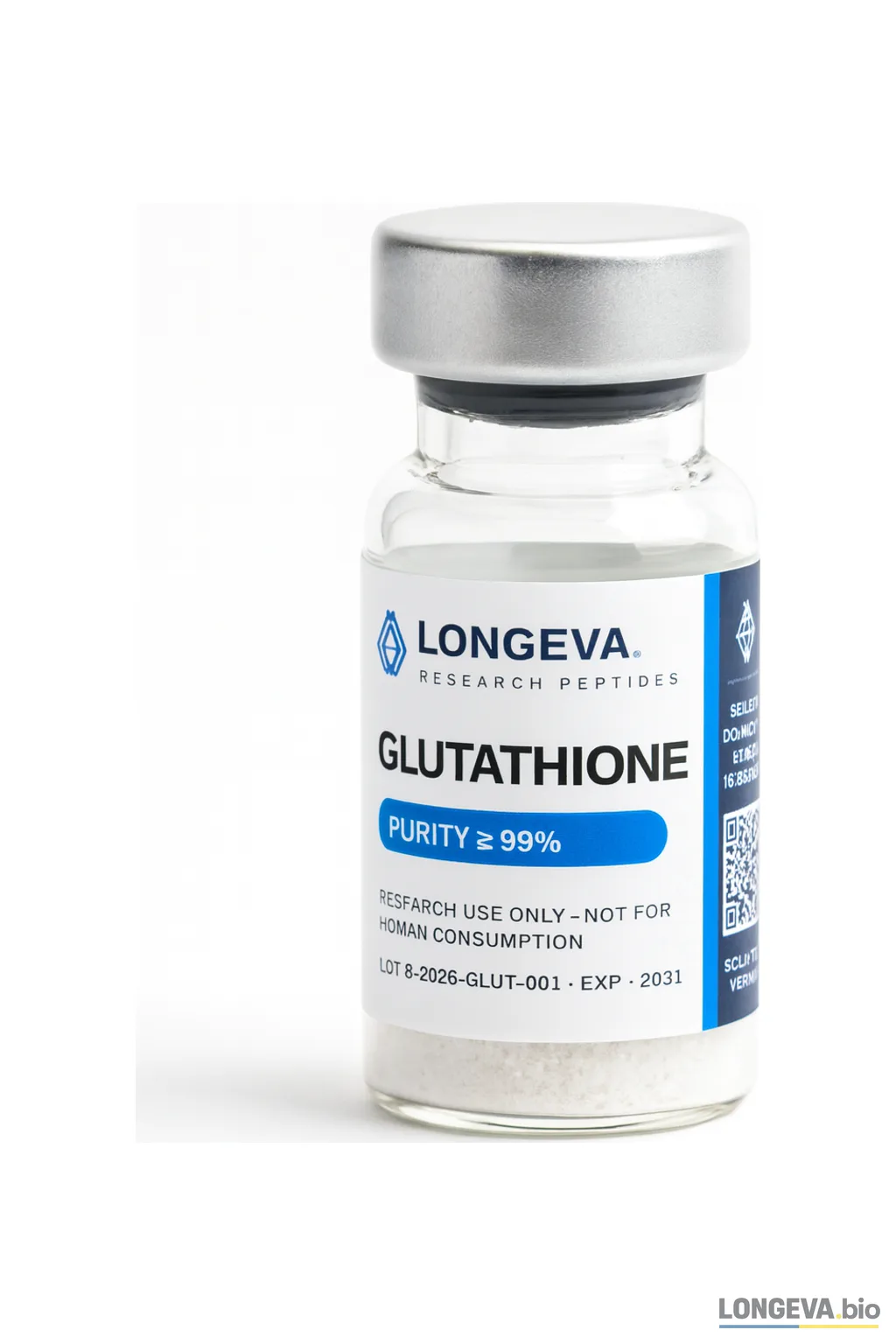
Glutathione (GSH) is a lyophilised powder with purity ≥99% (HPLC), ready to ship for research work. Every batch is checked by an independent third-party laboratory, and you can look the certificate of analysis up in the archive before ordering, with no empty promises on the label. Buying glutathione from Longeva means a lot with open documentation, not just powder in a vial. Not a medicinal or cosmetic product.
Glutathione is made of three amino acids: glutamate is attached to cysteine through an atypical γ-carboxyl bond, and glycine is attached to cysteine through an ordinary α-bond. That γ-bond is what makes the molecule resistant to cleavage by most intracellular peptidases; the free thiol (-SH) group of cysteine is responsible for its reducing activity. Molecular formula: C₁₀H₁₇N₃O₆S, molar mass 307.32 g/mol, CAS 70-18-8. Inside the cell, glutathione works as a pair with its oxidised form GSSG: it is the main intracellular thiol redox buffer and a cofactor of the enzyme glutathione peroxidase, and glutathione S-transferases use it to conjugate electrophilic compounds. This describes the biochemistry of the molecule, not a promised effect. The full breakdown of the mechanism with primary-source citations is in the monograph at /en/wiki/glutathione.
Material specifications
Longeva sends samples for analysis to independent third-party laboratories itself (Janoshik, Testides, Uzorak, North American Diagnostics) rather than relying on the raw-material supplier's figures alone. These are third-party labs in the plain sense: none of them holds ISO 17025 accreditation, and we do not claim otherwise. Longeva peptide batches come with a certificate of analysis; published reports are collected in the open archive at /en/coa, searchable by product name or batch number. If there is no report for your particular glutathione batch yet, check back later: the archive fills up as new analyses come in.
Questions about glutathione (GSH)
Is glutathione a peptide or an amino acid?
It is a tripeptide: three amino acids, glutamate, cysteine and glycine, joined by peptide bonds, rather than a single free amino acid. In everyday speech it is sometimes loosely called an "amino acid", but structurally it is a tripeptide.
Dosing
The information below is provided from public sources for reference only. It is not medical advice or instructions for use — only a doctor can set a schedule and a dose.
An adult study compared two daily oral regimens. Learn more →
Full dosing guideTitration schedule · referenceView glutathione (GSH) in the Longeva catalogue
Specifications, the 1500 mg pack size and a link to the certificate archive are on the product page.