Educational material about research reagents; not medical advice, sports coaching, or human-use instructions.
The goal phrase "peptides for muscle" is rare as a target query; practical traffic more often arrives via "IGF-1 LR3" and myostatin-pathway molecules (ACE-083, bimagrumab). Both paths are scientifically loose: one topic bucket still mixes IGF signaling, myostatin/activin pathway inhibitors, GH secretagogues, recovery peptides (BPC/TB), and lab RUO vials. Longeva hub does not sell a "mass-gain program" or rank a "best hypertrophy peptide". This page is a shelf map: who owns the muscle-growth commercial aisle, where hub wiki and editorial pillars live, and where the research use only (RUO) boundary sits.
Regena as canonical owner of the muscle aisle
| Layer | Where | What you get |
|---|---|---|
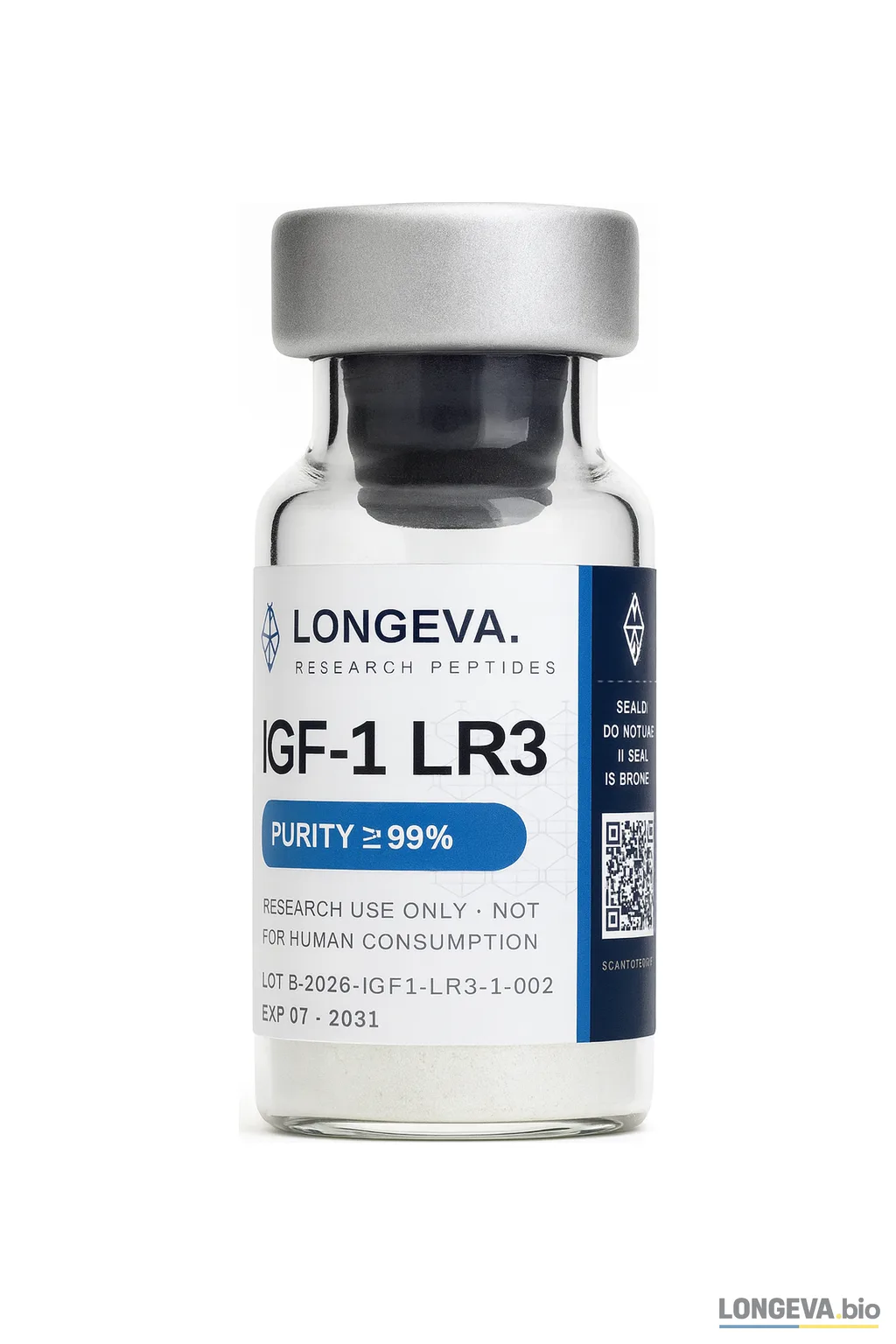
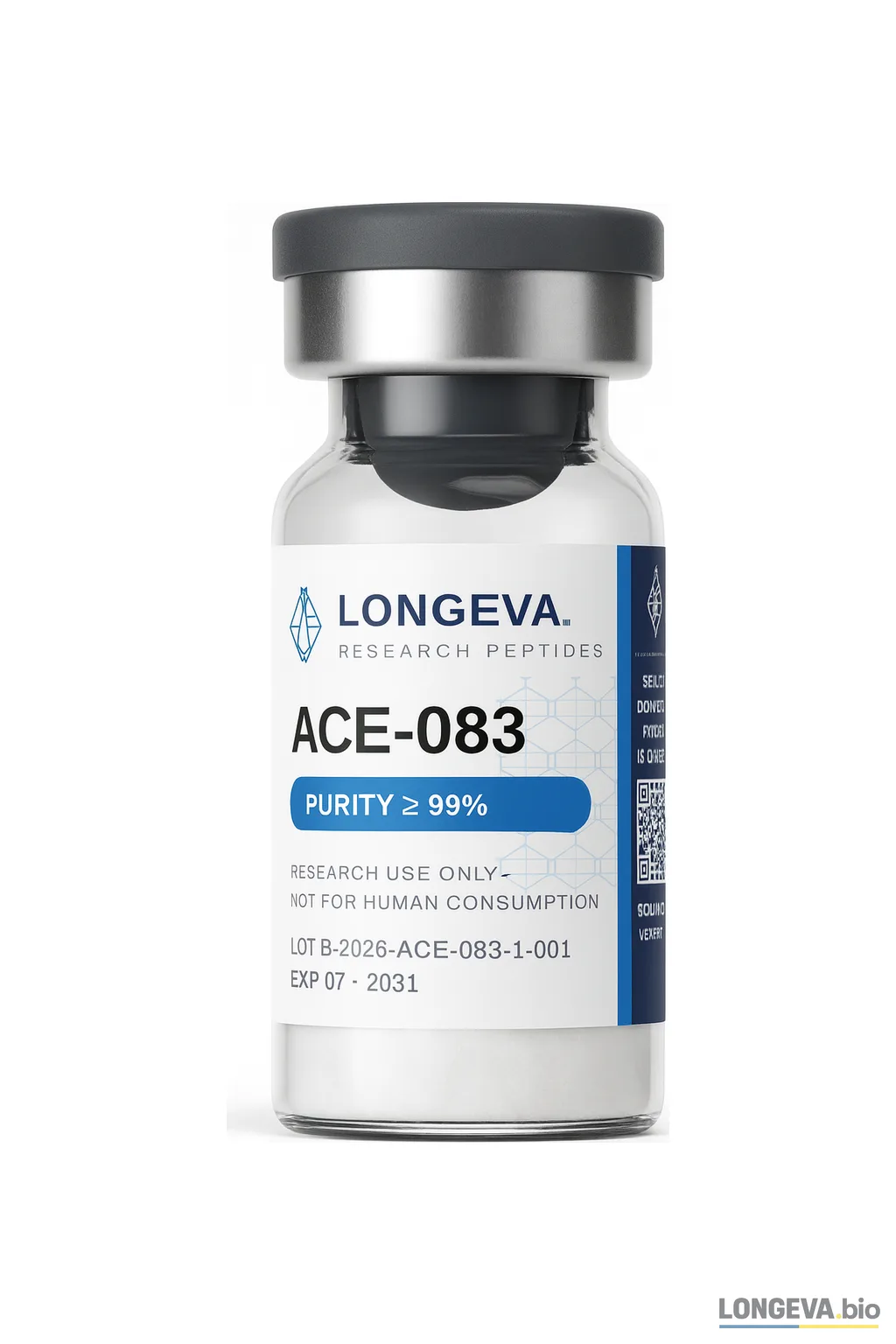
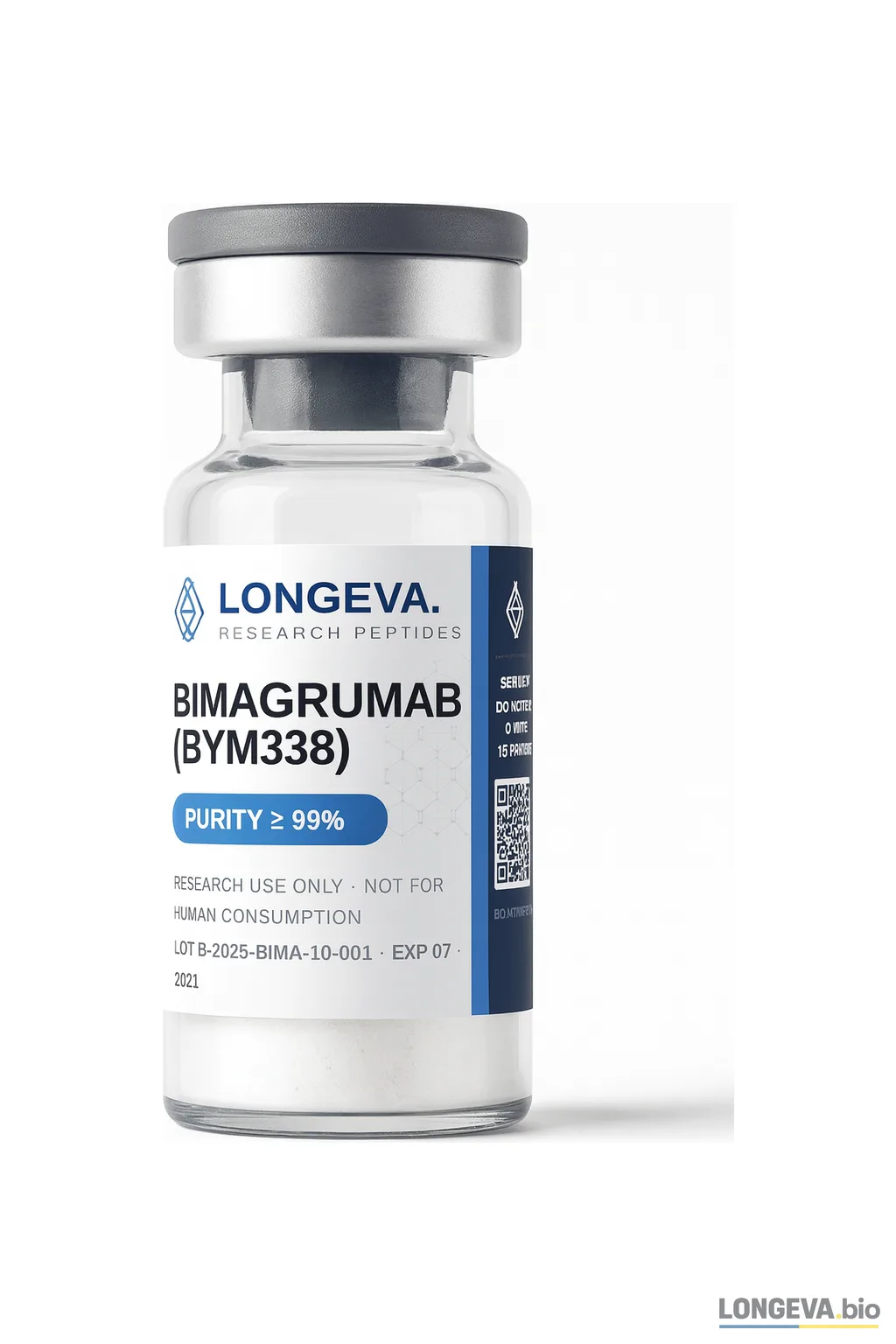
| Muscle growth RUO catalog | Regena · muscle growth | IGF-1 LR3, ACE-083, bimagrumab (BYM338) as research samples + COA |
| Deep catalog guide | Regena · IGF / myostatin shelf | Molecule table, LOT/COA, no "best for mass" ranking |
| IGF-1 LR3 pillar (hub) | molecule structure and signaling | What models measured, not lifestyle promises |
| Myostatin pathway (hub) | ACE-083, bimagrumab | Follistatin-Fc / anti-ActRII research context |
| GLP-1 / weight loss | weight-loss shelf, Incretin | Semaglutide ≠ IGF-1 LR3; different metabolic axis |
| Recovery / joints | Regena · BPC/TB | Connective tissue repair, not hypertrophy shelf |
| GH secretagogues | Evity · MK-677, ipamorelin, CJC-1295 | GH axis; adjacent cluster, does not replace IGF/myostatin shelf |
Regena is the canonical owner of muscle-growth / IGF / myostatin SKUs in our network. Hub stays editorial + navigation without a buy CTA on Regena SKUs.
Two biological axes on the muscle growth shelf
The Regena muscle growth aisle groups different mechanisms that casual search often merges into one "anabolic" bucket:
- IGF pathway. IGF-1 LR3 models signaling through the IGF-1 receptor in cell and animal systems. That is not the same as stimulating pituitary GH secretion (GH secretagogue).
- Myostatin / activin pathway. ACE-083 (follistatin-Fc) and bimagrumab (BYM338) (anti-ActRII) were studied as inhibitors of TGF-β superfamily signals that limit muscle growth in models. Clinical bimagrumab programs targeted other indications, not "sports mass gain".
IGF-1 LR3 and a myostatin-pathway inhibitor are different molecule classes with different protocol readouts. This map does not answer "which is better for mass".
IGF-1 LR3, ACE-083, bimagrumab: where to read about each
| Cluster | Molecule | Hub wiki | Hub editorial | RUO on Regena |
|---|---|---|---|---|
| IGF pathway | IGF-1 LR3 | wiki | research guide | card |
| Myostatin / activin | ACE-083 | wiki | follistatin-Fc review | card |
| Myostatin / activin | Bimagrumab (BYM338) | wiki | anti-ActRII context | card |
Neutral hub reference: hub PDP IGF-1 LR3 (buy on Regena).
RUO framing
- A RUO vial carries INN and fill weight; COA describes batch analytics (identity, purity, assay), not sports outcomes.
- In vitro myotube or in vivo model data describe readouts inside the lab protocol and do not transfer to dosing outside it.
- Myostatin inhibitors in clinic were studied for other indications; an RUO antibody sample ≠ a finished drug product.
- "Mass gain" and "hypertrophy" in marketing describe the search topic, not a verified vial effect.
Three adjacent aisles confused with muscle growth
| Query / topic | Actual destination | Why not muscle shelf |
|---|---|---|
| Semaglutide, Mounjaro, weight loss | hub · weight loss, Incretin | GLP-1 / incretin axis, not IGF-1R signaling |
| BPC-157, TB-500, recovery | Regena · BPC/TB | Connective tissue, not IGF/myostatin shelf |
| MK-677, ipamorelin, CJC-1295 | Evity · GH axis | GH secretagogue cluster, different axis |
Brand chooser: buy peptides · pick a brand.
Proteins and antibodies: why purity is the wrong metric here
This is the analytically hardest aisle in the catalog, because what sits on it is not peptides but large proteins and a monoclonal antibody. The line researchers are used to for peptides, "HPLC purity 98%", does not describe what determines whether this material is fit for use.
- IGF-1 LR3 is a roughly 83-amino-acid protein with disulfide bonds. Its behaviour depends on composition and on correct folding. Mis-paired disulfides give the same mass and a similar purity figure while being a different object. Purity does not report this.
- Aggregation is a separate question. Proteins form dimers and higher aggregates in solution and after lyophilisation. SEC (size-based separation) detects them; a standard reverse-phase column does not. A report without SEC says nothing about aggregation.
- Bimagrumab (BYM338) is an antibody, not a peptide. The relevant checks are heavy- and light-chain integrity (SDS-PAGE or CE), an aggregate profile, and where available target-binding confirmation. Asking for "HPLC purity" on a mAb is asking from the wrong method.
- ACE-083 is an Fc-fusion construct (follistatin-Fc). For fusion proteins the absence of clipped fragments matters additionally, because partial proteolysis leaves material looking "pure" by peak area while being incomplete.
- Endotoxin and sterility. For research-grade protein material this is standard documentation, and its absence is a quality signal about the supplier in its own right.
- LOT match against the PDF in the COA archive; verify a lot at
/verify/{lot}.
Working rule for this aisle: ask which methods produced the report, not only which number it shows. For an antibody or a fusion protein, "98% by HPLC" is either an incomplete picture or the wrong method entirely.
Three mistakes in mass-gain queries
- "Best peptide for mass gain". Hub does not rank. Identify the mechanism first, then open wiki/editorial for that molecule.
- Mix muscle shelf with fat loss. Different aisles: GLP-1 on Incretin, IGF/myostatin on Regena.
- Read clinical trial percentages as a vial promise. Trial numbers describe the studied drug in a trial protocol, not a Telegram RUO vial.
IGF and myostatin molecule reference
- IGF-1 LR3 · ACE-083 · Bimagrumab
- hub PDP IGF-1 LR3 (neutral reference, buy on Regena)
Where to read next
Longeva hub · navigational only · does not replace a lab protocol.