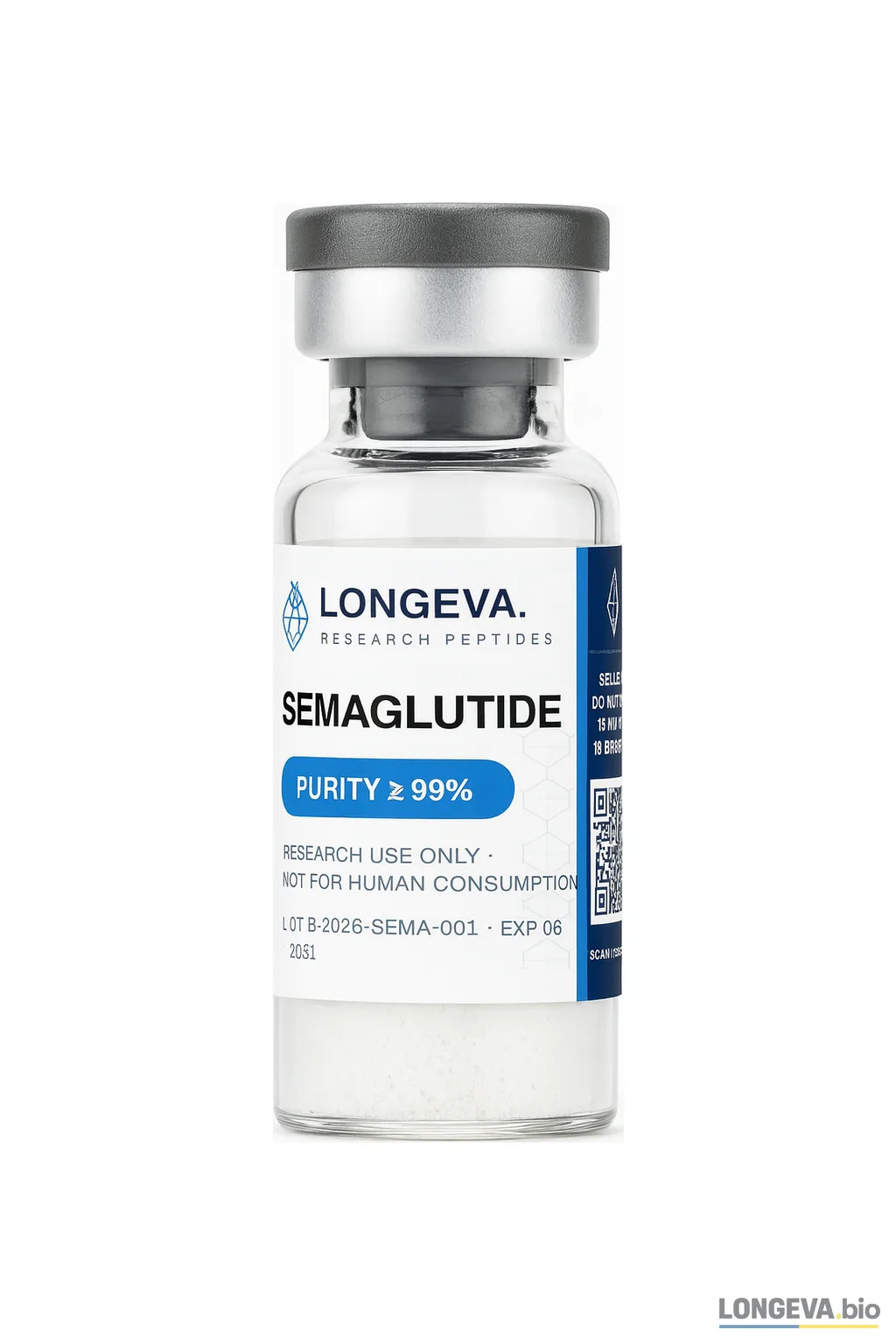
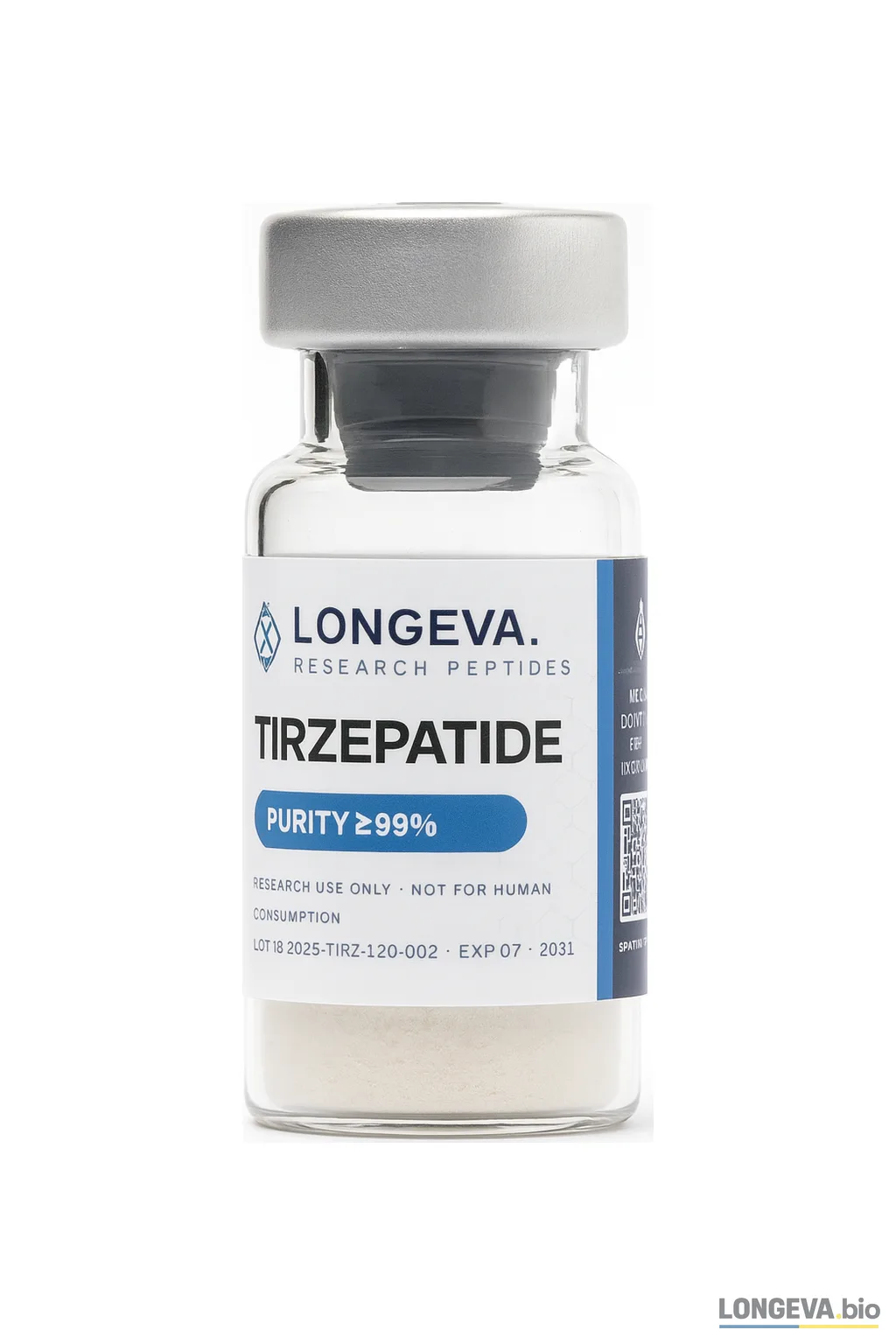
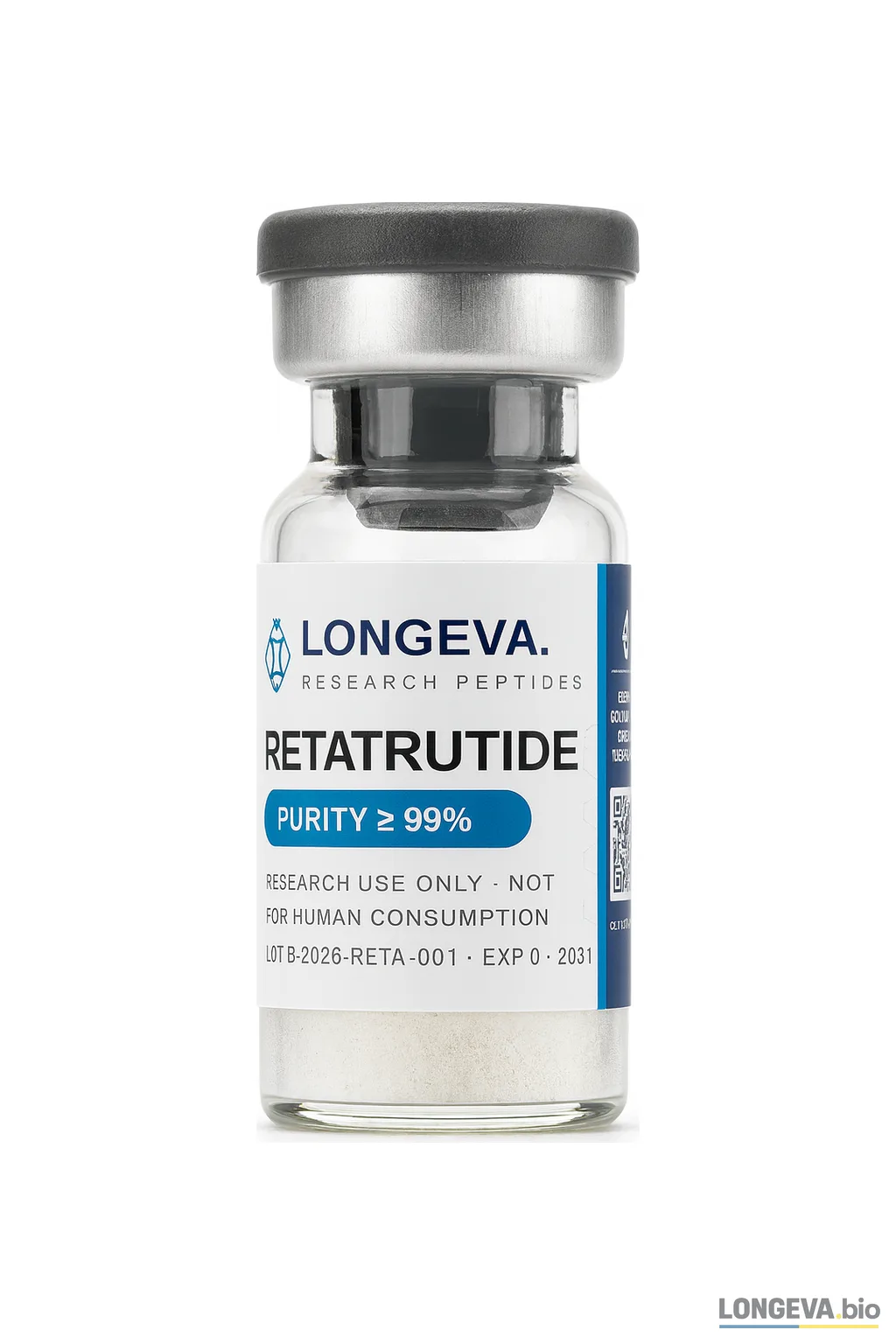
The three most popular incretin peptides in our catalog, semaglutide, tirzepatide and retatrutide, are often mentioned side by side, as if they were three versions of the same molecule. In reality, a fundamental design difference sits between them: they activate a different number of receptors. Semaglutide works with one receptor, tirzepatide with two, retatrutide with three. That is exactly where the differences in mechanism, potency and research-development stage come from. Below is an educational comparison of these three reagents for a research context. Everything stated here concerns handling a laboratory reagent and is not an instruction for human use.
This article does not teach reconstitution, if you need to dissolve the powder and calculate concentration, use the separate guide on reconstituting peptides with bacteriostatic water. Here we focus on how these three compounds differ by their very nature.
What an incretin agonist is
Incretins are hormones the gut releases in response to food intake. Their classic function is to enhance glucose-dependent insulin secretion: an oral glucose load produces a larger insulin response than the same amount of glucose given intravenously. This phenomenon is called the "incretin effect." The two main incretins are glucagon-like peptide-1 (GLP-1) and glucose-dependent insulinotropic polypeptide (GIP).
A receptor agonist is a molecule that binds to a receptor and activates it, mimicking the natural hormone. The trouble with native incretins is that they survive in the blood for only minutes: the enzyme dipeptidyl peptidase-4 (DPP-4) rapidly cleaves them. That is why all three peptides we compare are engineered to resist DPP-4 and to persist in circulation for days rather than minutes. This is achieved by two engineering tricks: non-proteinogenic (non-natural) amino-acid substitutions near the N-terminus that sterically block the enzyme, and acylation with a fatty diacid that gives reversible binding to plasma albumin and dramatically extends circulation time.
The key difference between our three compounds is the number of receptors they act on simultaneously:
- Single agonist (GLP-1R), activates only the GLP-1 receptor. This is semaglutide.
- Dual agonist (GIP/GLP-1R), activates both the GIP and GLP-1 receptors at once. This is tirzepatide.
- Triple agonist (GIP/GLP-1R/GCGR), adds the glucagon receptor to the previous two. This is retatrutide.
The logic of the class's evolution is the gradual addition of targets: from one receptor to two, then to three. Each new axis theoretically adds a separate mechanism of influence on energy and glucose metabolism. Let us look at each compound individually.
Three compounds: short profiles
Semaglutide, single GLP-1 agonist
Semaglutide (developed by Novo Nordisk) is an acylated long-acting GLP-1 peptide analog, the most thoroughly studied reagent of this class. It retains the peptide backbone of native GLP-1 but carries three key modifications: a substitution at position 8 (the DPP-4 cleavage site) with the enzyme-resistant α-aminoisobutyric acid, a lysine-to-arginine substitution for site-specific acylation, and a C18 fatty diacid attached through a γ-glutamic acid linker and two spacers, which provides albumin binding. An earlier single agonist of the same class, once-daily liraglutide, is covered separately in Saxenda and liraglutide.
Mechanistically, semaglutide glucose-dependently potentiates insulin secretion, suppresses glucagon, slows gastric emptying, and acts on appetite centers in the brain via circumventricular organs. It is the molecule most "road-tested" by the research community: it is backed by three large clinical programs, SUSTAIN (glycemic control), PIONEER (oral form) and STEP (body-weight regulation), plus the cardiovascular trials SUSTAIN-6 and SELECT. For more on the acylation chemistry, receptor signaling and trial results, see the semaglutide monograph. The reagent is available here: Semaglutide.
Tirzepatide, dual GIP/GLP-1 agonist
Tirzepatide (development code LY3298176, Eli Lilly) is a synthetic 39-residue peptide engineered as a single-molecule ("unimolecular") agonist of two incretin receptors at once: GIP and GLP-1. For combining two activities in a single molecule it earned the informal name "twincretin." The molecule's scaffold is built on the GIP sequence, with non-proteinogenic residues introduced for DPP-4 resistance and a C20 fatty diacid for albumin binding.
An interesting detail of its receptor pharmacology: tirzepatide is described as an "imbalanced and biased" dual agonist. It behaves as a full GIPR agonist but as a partial GLP-1R agonist (cAMP potency roughly 20-fold lower than native GLP-1) and is biased toward cAMP signaling relative to beta-arrestin recruitment. Its clinical base comprises the SURPASS (diabetes) and SURMOUNT (body weight) programs, as well as studies in heart failure, sleep apnea and the liver. For the dual-agonism mechanism, the debate over GIP's role, and a full review of the trials, see the tirzepatide monograph. Reagent: Tirzepatide.
Retatrutide, triple GIP/GLP-1/glucagon agonist
Retatrutide (development code LY3437943, Eli Lilly) is an investigational single-peptide compound that simultaneously activates three receptors: GIP, GLP-1 and the glucagon receptor (GCGR). It is the youngest molecule in the line and the most complex by design. Its scaffold, like tirzepatide's, derives from GIP, and its extended action is provided by the same strategy, a C20 diacid and albumin binding, giving a half-life of about 6 days.
Retatrutide's signature feature is the glucagon component. Historically, glucagon signaling is associated with raising blood glucose, but in the triple-agonist concept this potentially unfavorable effect is expected to be balanced by the simultaneous incretin stimulation of glucose-dependent insulin secretion. The authors describe the compound's profile as "balanced GCGR and GLP-1R activity with higher activity at GIPR", that is, a deliberately asymmetric triagonism. The glucagon "arm" theoretically adds an increase in energy expenditure on top of the appetite suppression. Retatrutide has completed phase 1 and phase 2 (in obesity, type 2 diabetes and hepatic steatosis) and has already entered a phase 3 program. For a full breakdown of the three components, preclinical data and trials, see the retatrutide monograph. Reagent: Retatrutide.
Comparison table
Below are the key characteristics of the three reagents. The figures are drawn from the published preclinical and clinical literature as a reference on the compounds' properties, not as guidance for use.
| Characteristic | Semaglutide | Tirzepatide | Retatrutide |
|---|---|---|---|
| Receptor targets | GLP-1R (single) | GIP + GLP-1R (dual) | GIP + GLP-1R + GCGR (triple) |
| Code / developer | Novo Nordisk | LY3298176 (Eli Lilly) | LY3437943 (Eli Lilly) |
| Molecular class | Acylated GLP-1 analog | Unimolecular co-agonist on a GIP scaffold | Unimolecular triagonist on a GIP scaffold |
| Half-life | ~1 week (~165 h) | ~5 days | ~6 days |
| Albumin binding | C18 diacid, >99% | C20 diacid, ≈99% | C20 diacid |
| Key research programs | SUSTAIN, PIONEER, STEP, SELECT | SURPASS, SURMOUNT, SUMMIT | Phase 2 (obesity, T2D, MASLD), TRIUMPH |
| Development stage | Most mature, broad RCT (randomized controlled trial) base | Mature, large RCT base | Investigational, phase 3 program ongoing |
What the single vs dual vs triple difference actually means
The main axis of comparison is not "better/worse" but the number of signaling pathways engaged. Each added receptor is a separate mechanism researchers are trying to recruit.
- GLP-1 (all three), glucose-dependent insulin secretion, glucagon suppression, slowed gastric emptying and central appetite reduction. This is the base axis shared by all three compounds.
- GIP (tirzepatide, retatrutide), predominantly insulinotropic action and effects on lipid metabolism in adipose tissue. Interestingly, in type 2 diabetes the insulinotropic action of GIP is markedly blunted, so the role of this component remains a subject of active scientific debate, in preclinical models both agonism and antagonism of GIPR, when combined with GLP-1, reduce body weight.
- Glucagon / GCGR (retatrutide only), adds an increase in energy expenditure and enhanced hepatic lipid oxidation. This is the axis that sets the triple agonist apart from the rest.
The half-life of all three is similar, from about 5 days (tirzepatide) to a week (semaglutide), and stems from the same engineering trick of albumin binding via a fatty diacid. In terms of reagent handling, this means a similar logic of reconstitution and storage for all three; for specific calculations by vial mass, see the reconstitution guide.
Which reagent to choose for research
This is a question of research context, not medical advice, the choice is dictated by which hypothesis or mechanistic axis you want to study.
- Semaglutide, the obvious choice when you need a "reference" molecule of the class with the largest body of published data and the most predictable pharmacology. It is the comparison standard: in many studies it serves as the active comparator.
- Tirzepatide, when the subject of interest is precisely the dual GIP/GLP-1 incretin axis and the question of the GIP component's role. It is the first "twincretin"-class compound with a large evidence base.
- Retatrutide, when the focus is the glucagon ("triple") mechanism and the newest wave of development. It is an investigational compound at the phase 3 stage, so there is less data than for the two above, but this is where the most active scientific frontier lies.
Practically: if you are building a comparative series "single → dual → triple," it makes sense to have all three reagents and observe how the addition of each receptor axis changes the result. All three compounds come with a batch certificate of analysis.
Where to go next
Ready to select reagents for a comparative study? Browse the GLP-1 / GIP category in the catalog, all three compounds are there side by side: Semaglutide, Tirzepatide and Retatrutide. Before dissolving the powder, enter the vial mass and solvent volume into the reconstitution calculator, it will instantly return the concentration in mg/mL and the graduations on an insulin syringe. And for the step-by-step mechanics of dissolving, see the peptide reconstitution guide.
Everything stated here concerns handling a laboratory reagent and is intended solely for scientific research purposes. Not for human use.
We covered separately how a search for retatrutide reviews differs from checking the material itself: retatrutide reviews and what the trials showed. It also lists what a buyer can match against the COA (certificate of analysis) without help.