Educational material about research reagents; not medical advice, anti-age coaching, or human-use instructions.
The navigational shelf "peptides for longevity" / "anti-age" routes the cluster, but Ukrainian search more often lands on specific INNs, "Semax", "MOTS-c", "glutathione", "epitalon", each with a different mechanism. Together with the goal phrase, one topic bucket still mixes bioregulators (Epitalon, Thymalin), mitochondrial peptides (MOTS-c), NAD+/glutathione, nootropics (Semax, Selank), GH secretagogues (MK-677, ipamorelin, CJC-1295), GLP-1 (weight loss), recovery BPC/TB, and lab RUO vials. Longeva hub does not sell a "longevity program" or rank a "best anti-age peptide". This page is a shelf map of the longevity cluster: who owns the commercial aisle, where hub wiki and Evity editorial live, mechanism sub-aisles, and where the research use only (RUO) boundary sits.
Evity as canonical owner of the longevity aisle
| Layer | Where | What you get |
|---|---|---|
| Longevity RUO catalog | Evity · longevity | Epitalon, Thymalin, MOTS-c, Semax, Selank, NAD+, glutathione + COA |
| Goal-shelf / catalog guide | Evity · research catalog | Molecule table, LOT/COA, no "best for life" ranking |
| Bioregulator editorial (Evity) | Epitalon, Thymalin | What models measured, not lifestyle promises |
| Mito / NAD editorial (Evity) | MOTS-c | Mitochondrial context, not GLP-1 shelf |
| Nootropic neighbors | Semax, Selank | Cognitive models; hub wiki Semax, Selank |
| GH secretagogue (adjacent cluster) | Evity · GH axis | MK-677, ipamorelin, CJC-1295, different axis, not bioregulator shelf |
| GLP-1 / weight loss (other aisle) | hub · weight loss, Incretin | MOTS-c ≠ semaglutide; different metabolic axes |
| Recovery hub map | hub · recovery | BPC/TB, different goal |
| Muscle / IGF (other aisle) | hub · muscle | Hypertrophy research, not longevity shelf |
Evity is the canonical owner of longevity / anti-aging SKUs in our network. Hub stays editorial + navigation without a buy CTA on Evity SKUs.
Longevity sub-aisles: not all "anti-age" is the same
- Bioregulators. Epitalon, Thymalin, pineal/thymus context in cell aging and immune function models.
- Mito / NAD axis. MOTS-c, NAD+, glutathione, different readout (mitochondria, redox), not the nootropic shelf.
- Nootropics. Semax, Selank, cognitive and stress/anxiety models; adjacent search intent, often confused with "longevity".
- GH secretagogues. MK-677, ipamorelin, CJC-1295 on Evity; GH axis cluster, does not replace Epitalon/MOTS-c shelf.
"Peptide for longevity" without INN and mechanism is a scientifically empty phrase. Identify the molecule class first, then wiki/editorial and the RUO card.
Epitalon, thymalin, MOTS-c: where to read about each
| Cluster | Molecule | Hub wiki | Hub PDP | RUO on Evity |
|---|---|---|---|---|
| Bioregulator | Epitalon | wiki | PDP | card |
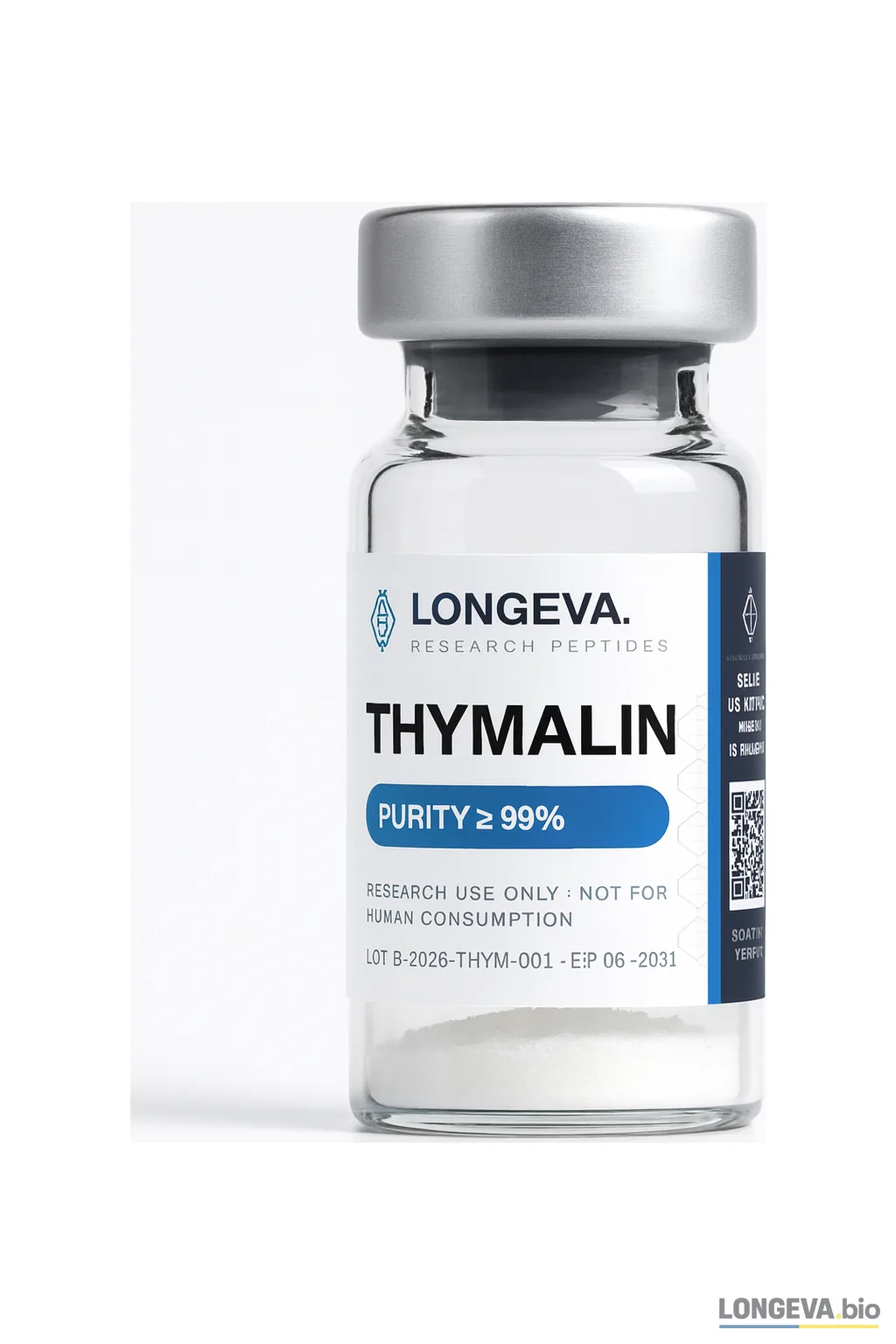
| Bioregulator | Thymalin | wiki | PDP | card |
| Mito | MOTS-c | wiki | PDP | card |
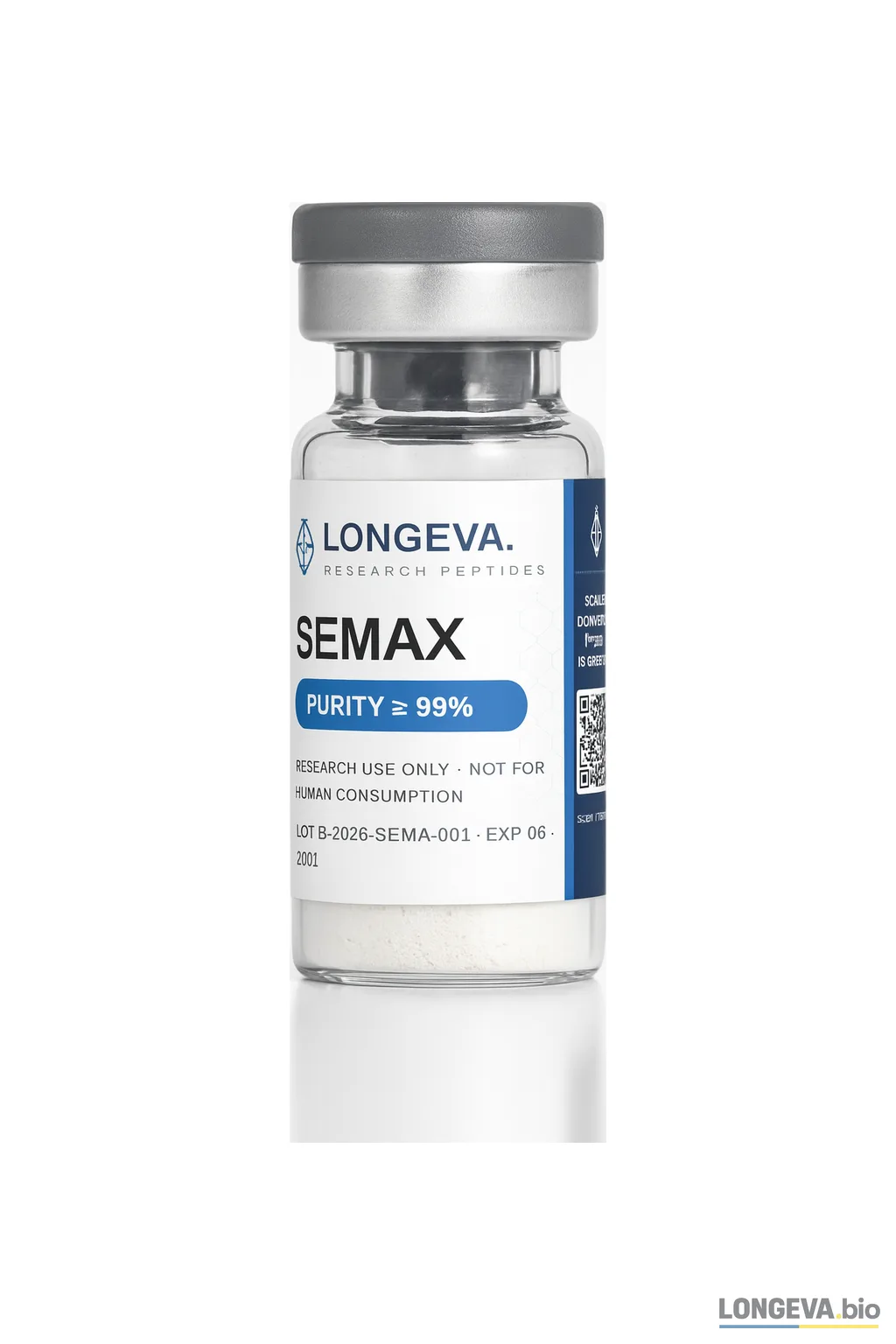
| Nootropic | Semax | wiki | PDP | card |
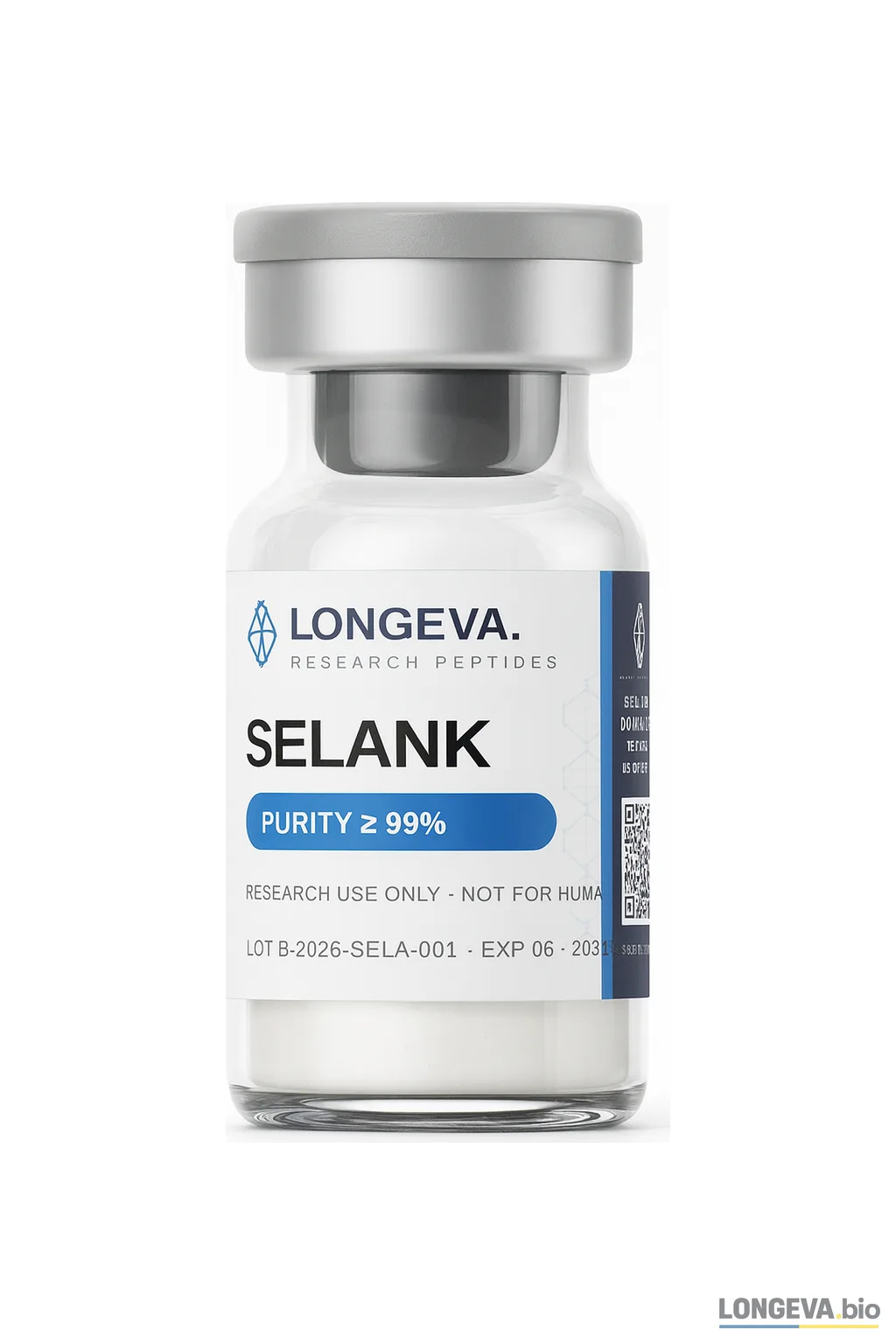
| Nootropic | Selank | wiki | PDP | card |
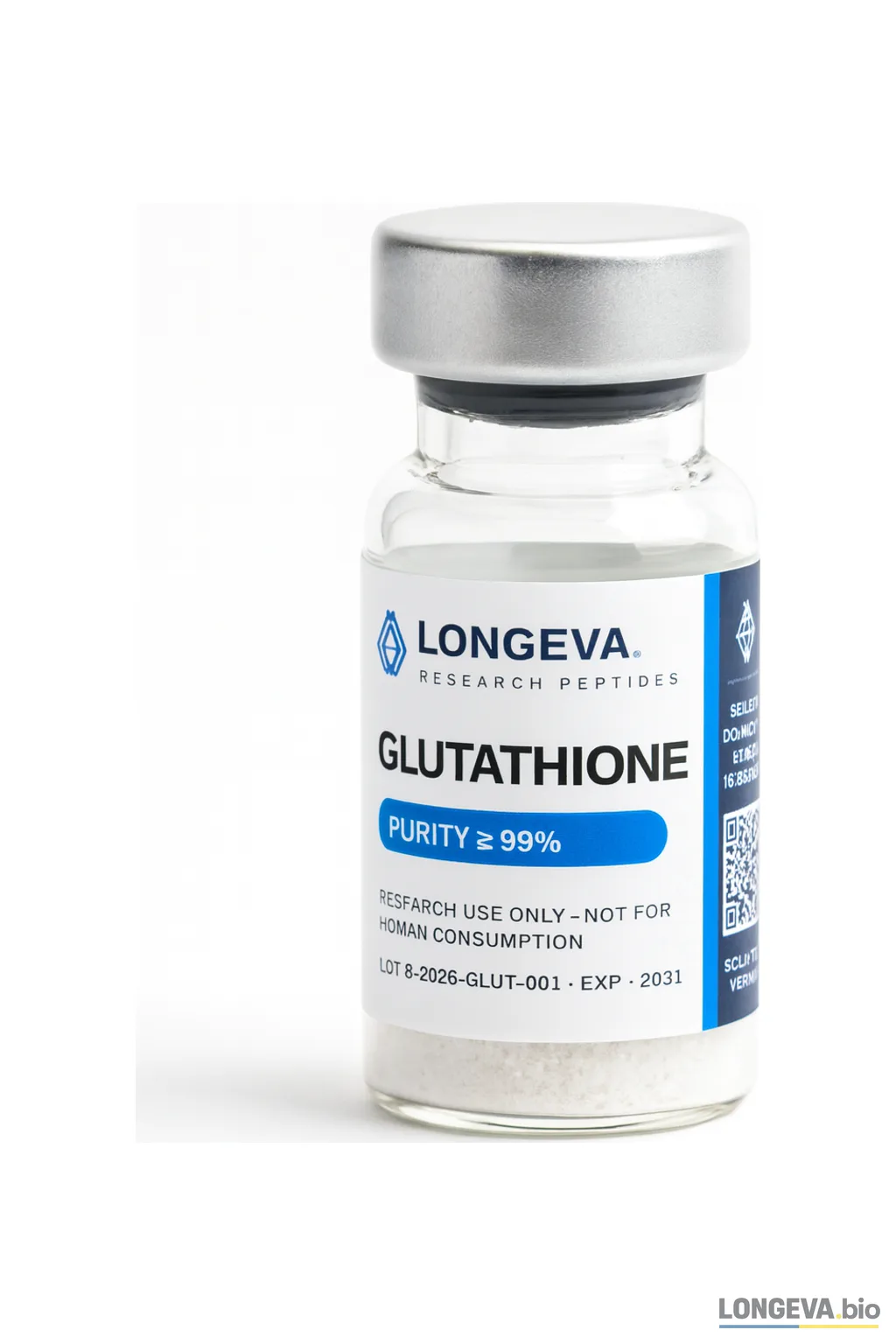
| Redox | Glutathione | wiki | PDP | card |
Full category: Evity · longevity. Goal-shelf: research catalog.
RUO framing (why "anti-age peptide" ≠ "rejuvenation")
- A RUO vial carries INN and fill weight; COA (certificate of analysis) describes batch analytics, not a clinical "extend life" outcome.
- In vitro, animal models, and reviews describe readouts inside the lab protocol and do not transfer to dosing outside it.
- Bioregulator studies (Epitalon, telomere/clock readouts in models) are not equivalent to an RUO powder from an ad.
- "Anti-age", "longevity", and "rejuvenation" in marketing describe the search topic, not a verified vial effect.
When a longevity query belongs on another aisle
| Query / topic | Actual destination | Why not longevity shelf |
|---|---|---|
| Weight loss, GLP-1, Ozempic | hub · weight loss | Incretin incretin axis, not bioregulator shelf |
| BPC-157, TB-500, recovery | hub · recovery | Tissue repair, not anti-age |
| IGF-1 LR3, myostatin | hub · muscle | Hypertrophy research |
Brand chooser: buy peptides · pick a brand.
Short peptides and the limits of HPLC
The longevity aisle consists mostly of very short peptides, and that changes what a COA can prove. Epitalon is the tetrapeptide Ala-Glu-Asp-Gly; thymalin is a peptide fraction rather than a single molecule. Short-chain analytics carry their own limits.
- The shorter the chain, the weaker the separation. A tetrapeptide makes few hydrophobic contacts with the column, so it elutes early and inside a narrow window shared with fragments and sequences of similar composition. One tidy peak is less informative here than the same peak would be for a 30-amino-acid peptide.
- HPLC (high-performance liquid chromatography) does not read residue order. Sequences built from the same set of residues share a gross mass. For a short peptide, identity is therefore established by MS/MS (tandem mass spectrometry) fragmentation, which reconstructs the order, not by total mass alone.
- A peptide fraction is not a single substance. Thymalin is described as a complex of thymus polypeptides. For that material the correct analytics are a profile plus total content, not "99% purity", because a single pure molecule is not what the material is. A report promising one purity figure for a fraction is describing the wrong object.
- Hygroscopicity distorts weighing. Short peptides take up water readily. Mass weighed in humid air overstates content, so peptide content and water should be separate lines in the report.
- LOT match against the PDF in the COA archive; verify a lot at
/verify/{lot}.
This is why counterfeits are hardest to spot by eye in the longevity segment: for a tetrapeptide the purity number alone guarantees very little. The question a report must answer is "which sequence", not "how pure".
Three mistakes in anti-age queries
- "Best peptide for longevity". Hub does not rank. Identify mechanism first (bioregulator vs mito vs nootropic vs GH), then wiki/editorial.
- Mix MOTS-c with semaglutide or BPC-157. Different aisles and brands (Evity vs Incretin vs Regena).
- Read telomere/clock model data as a vial promise. The model describes a lab protocol, not an RUO reagent.
Bioregulator molecule reference
- Epitalon · MOTS-c · Glutathione · Semax · Selank
Where to read next
Longeva hub · navigational only · does not replace a lab protocol.